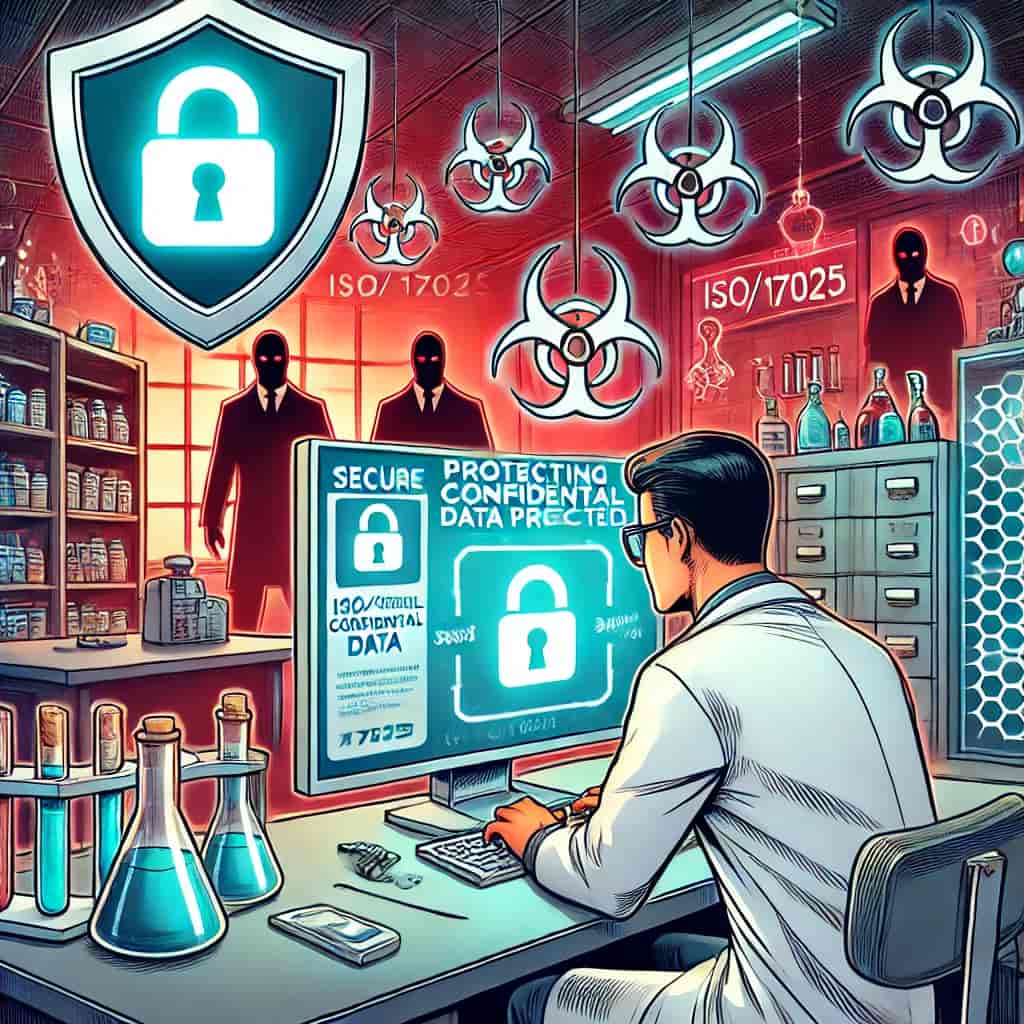
Imagine working with critical information in a laboratory that is developing a revolutionary formula or performing analysis for a key customer product. What would happen if that data got into the wrong hands?
In the laboratory world, protecting confidentiality is not just another detail, it is a fundamental requirement that can define the success or failure of a customer relationship.
ISO/IEC 17025 provides clear guidelines on how to ensure the confidentiality of information in a laboratory, but how do you actually ensure this protection on a day-to-day basis?
Keeping sensitive information safe not only builds trust between the laboratory and the customer, but is a guarantee that the laboratory operates with integrity, which is essential to its reputation and competitiveness in the marketplace.
Today we’ll guide you through the key practices for meeting the strict confidentiality requirements of ISO/IEC 17025, breaking down practical examples, a sample policy and tools that will enable you to protect the most valuable thing you handle: your customers’ information.
Are you ready to reinforce your commitment to confidentiality and ensure that your laboratory is a benchmark for security and trust?
Here we go!
What is confidentiality and why is it important in a laboratory?
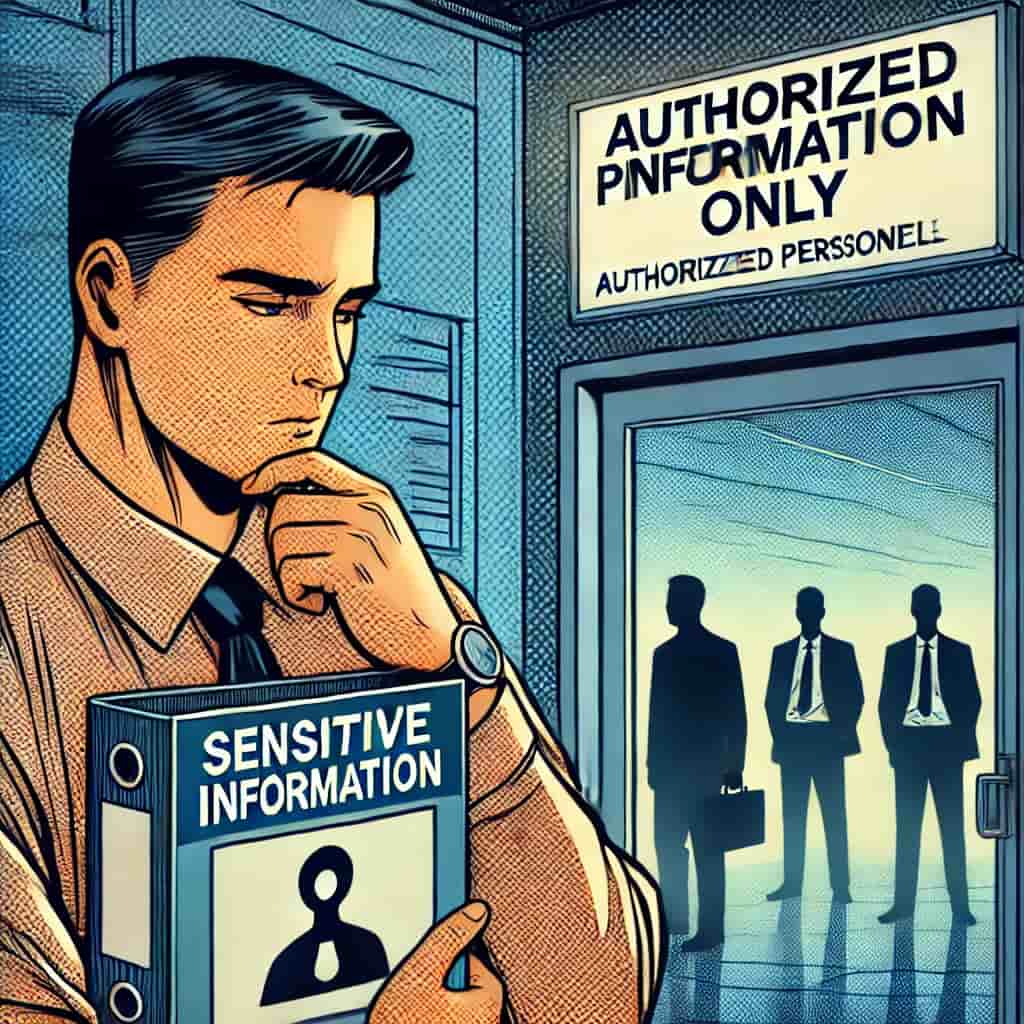
Confidentiality, in simple terms, is the obligation to protect sensitive information and ensure that only authorized persons have access to it.
In a laboratory context, this information can range from test results, to methods of analysis, technical procedures or any other data provided by customers.
ISO/IEC 17025 recognizes confidentiality as one of the fundamental pillars for establishing trusting relationships between laboratories and their customers.
But what makes confidentiality so important? Imagine that a laboratory is conducting tests for a new drug formulation from a pharmaceutical company.
The results of those tests are key customer information, and if they were to fall into the hands of competitors or unauthorized third parties, they could have serious consequences, both financial and reputational.
Maintaining confidentiality not only protects the client’s interests, but also ensures that the laboratory maintains its credibility in the marketplace.
Within the scope of ISO/IEC 17025, confidentiality implies that all information obtained or generated during laboratory activities must be strictly protected. This includes:
– Test results: Data obtained from samples tested.
– Test methods and technical procedures: Information related to how analyses are performed.
– Customer data: Any data provided by customers, such as specifications, targets or particular requirements.
Laboratories must implement clear policies and robust procedures to ensure that confidentiality is maintained at all times, and this is precisely what ISO/IEC 17025 seeks to ensure.
Confidentiality, therefore, goes beyond a simple requirement: it is a fundamental tool to protect the interests of those who rely on the laboratory and to ensure the integrity of the laboratory itself in the marketplace.
How ISO/IEC 17025 addresses confidentiality
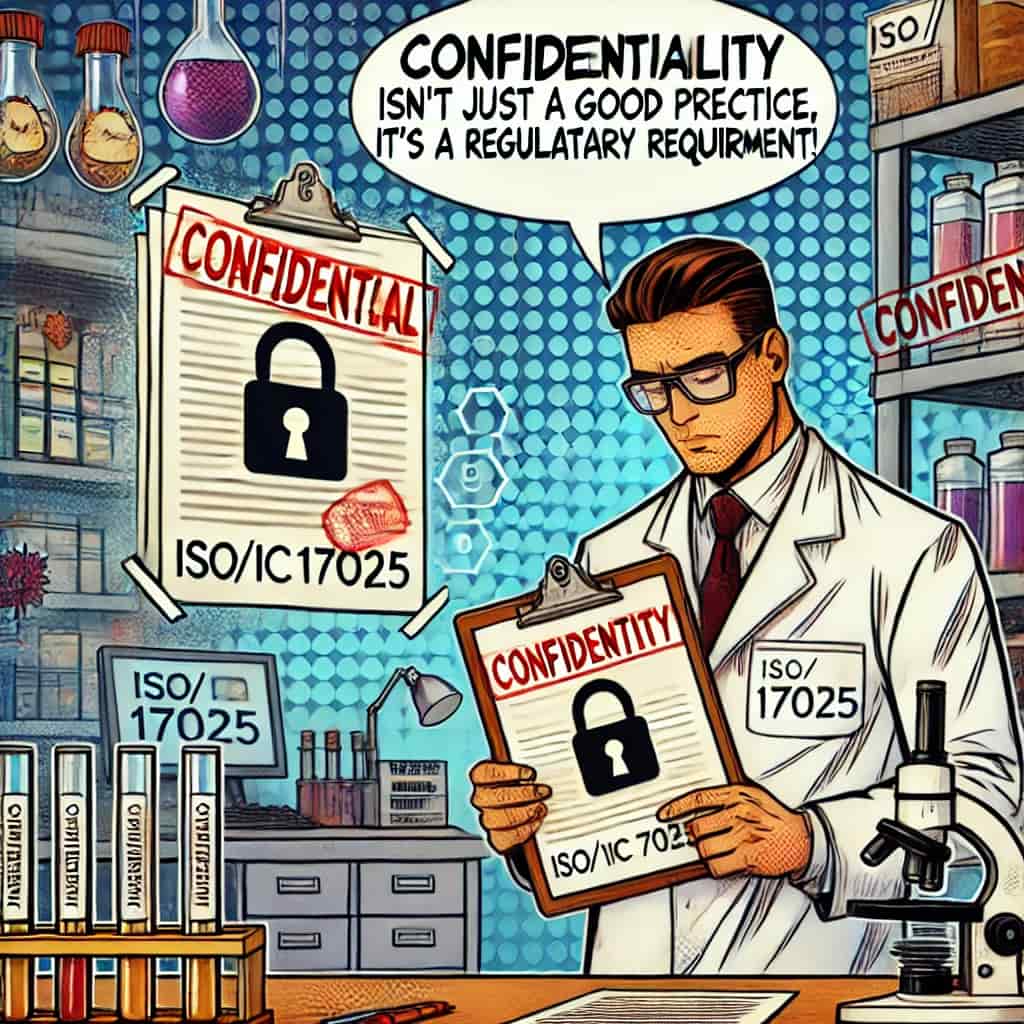
Confidentiality is not just a good practice, it is a regulatory requirement clearly stipulated in ISO/IEC 17025.
In its latest version (2017), the standard sets out specific guidelines to ensure that laboratories keep under control all information generated or provided by their customers, from test results to methods of analysis and any other sensitive data.
The standard addresses confidentiality at several points, but the main one is found in clause 4.2 (Confidentiality). This section details that laboratories are responsible for the confidentiality of all information obtained or created during their testing or calibration activities.
Below is a breakdown of some of the key aspects of the standard:
Laboratory Responsibility
The laboratory has an obligation to protect its customers’ information, which means implementing clear policies and procedures to ensure that all information is handled confidentially.
The responsibility extends to all staff members and any external parties who have access to the data, such as auditors or consultants.
Legally binding agreements
The standard specifies that the laboratory must establish contractual agreements that ensure confidentiality. This may include confidentiality agreements signed by staff, external suppliers, subcontractors and anyone else who has access to sensitive information.
These agreements should ensure that any information obtained during laboratory activities is only used for authorized purposes.
Exceptions for legal obligations
In some cases, confidentiality may be disclosed due to legal obligations. ISO/IEC 17025 provides that laboratories may be required by law or contract to disclose information to regulators or statutory bodies.
In such situations, the laboratory should notify the customer in advance of what information will be disclosed, unless prohibited by law.
Confidentiality of third parties
The standard also covers the protection of information obtained from third parties. If the laboratory receives information from an outside source other than the customer, such as consumer complaints or information from regulatory agencies, that information must also be treated as confidential.
It cannot be shared with other customers or the public without the explicit consent of the source.
Continuing confidentiality
The commitment to confidentiality does not cease at the end of contracts or agreements. The standard states that information must continue to be protected even after the termination of activities with a client or after the departure of a member of the laboratory staff.
Confidentiality is of a permanent nature, which reinforces the importance of its long-term management.
Confidentiality audits and review
As part of the internal audits that laboratories are required to perform under ISO/IEC 17025, it is necessary to periodically review confidentiality policies and practices.
These audits help to identify potential gaps and ensure that the measures implemented remain effective as the laboratory grows or changes.
Practical examples of confidentiality in the laboratory

To better understand how confidentiality is applied in practice, it is useful to review some concrete examples of situations that may occur in a laboratory. Confidentiality covers not only the protection of test results or calibrations, but also the management of all information circulating within the laboratory and the relationship with customers.
Here are a number of scenarios in which confidentiality plays a crucial role:
Example 1: Confidentiality in New Product Development
A laboratory specializing in food analysis receives a request to analyze a new recipe from a food manufacturer that is about to launch an innovative product on the market.
This recipe is highly confidential, as it has not yet been disclosed to the public or competitors.
Laboratory actions:
– The laboratory signs a confidentiality agreement with the client, guaranteeing that all information related to the formula will be treated as confidential.
– Only authorized laboratory personnel have access to the formula and test results.
– The test results are stored in a secure document management system with access control, and the customer is informed directly of the results, with no third parties involved in the process.
This example illustrates how confidentiality protects the customer’s commercial interests, preventing the leakage of sensitive information that could give competitors an advantage.
Example 2: Limited access to sensitive data
A pharmaceutical research laboratory conducts stability testing on a new drug in clinical development.
The results of these tests are extremely sensitive, as any leakage of information could impact market competition or public perception of the drug.
Laboratory actions:
– Physical access to areas where tests are performed and results are stored is restricted.
– Secure passwords and authentication systems are used to access electronic files where data are stored.
– All employees working on this project have signed confidentiality agreements and have been trained in the secure handling of information.
– In addition, periodic audits are scheduled to check that access controls are working properly.
This case reflects how physical and technological security measures are essential to maintain data confidentiality in environments where information is critical.
Example 3: Disclosure of information due to legal obligation
Imagine that an environmental testing laboratory performs soil contamination tests for a construction company. During testing, an elevated level of toxic substances is discovered that, by law, must be reported to the environmental authorities.
Laboratory actions:
– The laboratory immediately notifies the client of the situation and informs the client that, by legal obligation, the results must be communicated to the appropriate regulatory authority.
– The communication of this information is done following legal procedures, and the client is informed of each step, unless the law prohibits prior notification to the client.
This example demonstrates how, although confidentiality is a key principle, there are situations in which a laboratory’s legal obligation exceeds this principle. However, even in these cases, the laboratory must follow clear procedures and notify the client to the extent possible.
Example 4: Confidentiality of information obtained from third parties
A cosmetics testing laboratory receives a complaint from a consumer who claims to have suffered an allergic reaction after using a product tested by the laboratory. Although the laboratory’s client is the manufacturer of the cosmetics, the consumer’s complaint must be treated with confidentiality.
Actions by the laboratory:
– The laboratory protects the consumer’s identity and does not disclose this information to the manufacturer without the consumer’s express consent.
– If it is necessary to share some details with the customer, the laboratory ensures that the information shared is minimal and does not include sensitive personal data, unless required for public health or regulatory reasons.
This case exemplifies how confidentiality applies not only to the laboratory’s customers, but also to third parties who interact indirectly with the laboratory.
Example 5: Confidentiality of personnel and third parties involved
A laboratory subcontracts an external consultant to assist in the validation of a new test method. During his work, the consultant has access to a large amount of client data, including technical procedures and previous test results.
Laboratory actions:
– Before starting his work, the consultant signs a confidentiality agreement that prohibits him from disclosing any client information outside the laboratory.
– The consultant only has access to the information strictly necessary to perform his task and not to additional sensitive data.
– The laboratory verifies that the consultant complies with confidentiality measures throughout the duration of the project.
This example highlights the importance of ensuring that everyone who interacts with the laboratory’s information, whether employees or third parties, is committed to confidentiality policies.
Best practices and policies for implementing confidentiality in the laboratory

Implementing effective policies to protect confidentiality in a laboratory not only helps to comply with ISO/IEC 17025, but also strengthens trust with customers and ensures that sensitive information is always under control.
Below are some of the key best practices and policies that laboratories should adopt to ensure that confidentiality is maintained at all times.
Develop a clear and understandable confidentiality policy.
The first step is to establish a formal confidentiality policy that is aligned with the requirements of ISO/IEC 17025. This policy should be clear, accessible and understandable to all employees, and should specify what information is confidential and how it should be handled.
It is crucial that the policy covers:
– Types of confidential information: such as test results, customer data, internal procedures, and any other sensitive data.
– Staff responsibilities: Clearly state which roles have access to what type of information.
– Actions in case of non-compliance: Define the consequences of mishandling confidential information, which reinforces staff commitment.
Example of a XYZ Laboratory confidentiality policy
Purpose of this policy
The purpose of this policy is to ensure that all information obtained or generated during XYZ laboratory activities is treated confidentially, protecting customer data and ensuring compliance with ISO/IEC 17025.
2. Scope
This policy applies to all employees, contractors, suppliers and other interested parties who have access to confidential information generated or received by XYZ Laboratory. Confidential information includes, but is not limited to: test results, test methods, technical data, customer information and any other information classified as sensitive.
3. General Policy
XYZ Laboratory is committed to maintaining the confidentiality of all information provided by its customers or generated during testing or calibration activities. All personnel and external parties with access to confidential information must comply with the following guidelines:
– All customer information is confidential and may only be disclosed with the written consent of the customer or by legal requirement.
– All employees, consultants and subcontractors must sign a confidentiality agreement before accessing any confidential information.
– Access to confidential information is limited to authorized personnel who require such information to perform their duties.
– All confidential information must be stored in secure systems with appropriate access controls (passwords, two-factor authentication, etc.).
– Confidential physical documents should be stored in restricted and locked areas.
– Disclosure of confidential information to third parties shall only be made with prior authorization from the client, unless there is a legal or contractual obligation to do so.
4. Responsibilities
– Employees: All employees must comply with this policy and immediately report any breach of this policy to the laboratory’s confidentiality officer.
– Management: XYZ laboratory management is responsible for ensuring that the necessary security measures are implemented to protect confidential information.
– Privacy Officer: The Privacy Officer will monitor compliance with this policy, organize periodic audits and take corrective action if non-compliance is detected.
5. Specific Procedures
– Signing confidentiality agreements: Every employee, subcontractor or consultant shall sign a confidentiality agreement before accessing sensitive information.
– Access control: Computer systems containing confidential information shall be protected by passwords and multi-factor authentication protocols.
– Confidentiality audits: The laboratory will conduct annual internal audits to review compliance with confidentiality policies and detect possible breaches.
6. Exceptions
The only exception to the confidentiality policy is when the laboratory is required by law or legal requirement to disclose information. In such cases, the client will be notified prior to any disclosure, unless the law prohibits such notification.
7. Penalties
Any breach of this policy by employees or third parties will be considered gross misconduct and may result in disciplinary action, including termination of the employment contract or third party agreement.
8. Policy Review
This policy will be reviewed annually or as necessary to ensure that it continues to meet regulatory requirements and the needs of the laboratory.
Sign confidentiality agreements
One of the most effective practices is to require all staff and any external parties who have access to information (auditors, consultants, subcontractors) to sign confidentiality agreements. These agreements should cover:
– The obligation to protect information both during their employment or contract and after the end of their employment relationship.
– The prohibition of disclosing information to third parties without the client’s consent or legal approval.
– Penalties for non-compliance, which may include legal sanctions.
Control access to information
To maintain confidentiality, it is essential to limit access to sensitive information to only those people who need to see it to perform their duties. The following access control measures are critical:
– Segregation of duties: Ensure that only authorized personnel have access to certain areas of the laboratory or key information systems.
– Electronic file protection: Use strong passwords, multi-factor authentication, and encryption software to protect electronically stored data.
– Physical access restriction: Implement security measures to limit physical access to areas of the lab where sensitive information is handled, such as high-security labs or server rooms.
Regular training on confidentiality
Laboratory personnel should receive regular training on how to securely handle confidential information. Training should include:
– Awareness of the importance of confidentiality: explaining why it is crucial to protect client information and how non-compliance can affect the laboratory’s reputation.
– Procedures and policies: Ensure that all staff are familiar with confidentiality policies and know how to apply them in their daily work.
– Simulations and audits: Conduct internal simulations and audits to assess whether employees are complying with confidentiality policies.
Internal confidentiality audits
Periodic internal audits are a fundamental tool to verify that confidentiality policies are being followed correctly. These audits should evaluate:
– Policy compliance: verify that personnel are following established procedures and that access controls are working effectively.
– Risk identification: Detect possible breaches or weaknesses in confidentiality measures, such as unauthorized access to information or lack of security in computer systems.
– Continuous improvement: Propose improvements and updates to confidentiality policies, based on audit findings.
Use of data protection technologies
Technological advances offer multiple tools to ensure that confidential information is effectively protected. Some of the recommended technologies include:
– Document management systems: That allow control over who accesses documents, with the ability to track changes and manage access permissions.
– Encryption software: To protect electronically stored or transmitted data.
– Secure backup systems: To ensure that confidential information is backed up in secure environments to prevent loss due to technical failures or cyber-attacks.
Third party management
If the laboratory works with third parties, such as subcontractors or external service providers, it is crucial that they also comply with confidentiality policies. To do so:
– Sign confidentiality agreements with third parties: As with employees, it is necessary to sign confidentiality agreements with any external entity that has access to the information.
– Monitoring and audits: Conduct regular audits of suppliers to ensure that they are complying with the laboratory’s confidentiality standards.
Handling confidentiality incidents
Despite all preventive measures, incidents may occur where confidentiality is compromised. The laboratory should have a clear plan for managing these incidents, including:
– Detection and notification: clear instructions for identifying and reporting confidentiality breaches, with quick response times.
– Incident analysis: Investigate the causes of the breach and determine how to prevent it from happening again.
– Customer communication: Immediately notify the affected customer, explaining the corrective actions that will be taken to resolve the problem.
Consequences of breach of confidentiality
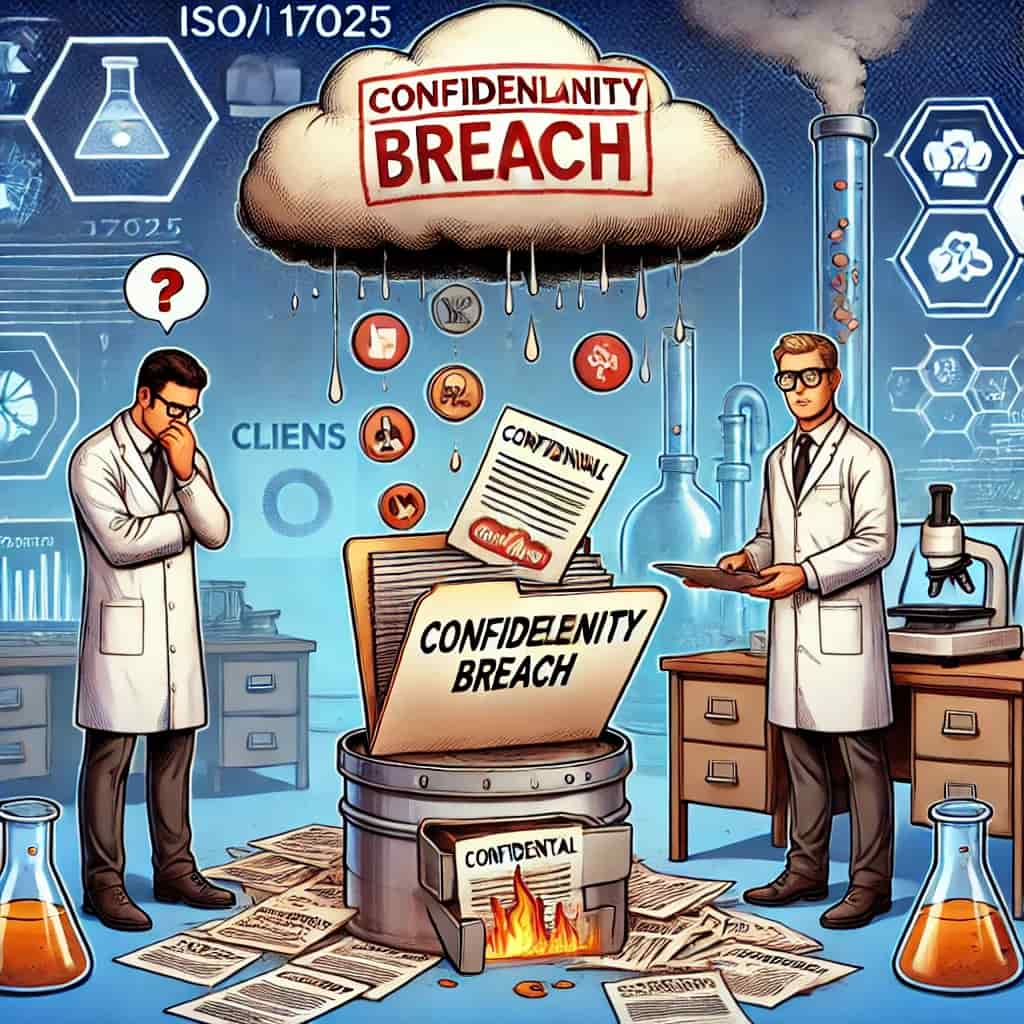
Loss of customer trust
One of the most immediate and damaging impacts of violating confidentiality is the loss of customer trust. If a customer discovers that their sensitive information has been disclosed without their consent, they are likely to lose confidence in the laboratory.
This not only affects the relationship with the current customer but can also deter potential future customers from working with the lab.
Legal impact
Depending on the type of information leaked and applicable local or international regulations, the lab could face legal sanctions.
The disclosure of confidential information, especially if it involves breaches of contractual agreements or data protection regulations like the General Data Protection Regulation (GDPR) in Europe, can result in hefty fines and legal proceedings.
Damage to reputation
In the laboratory sector, reputation is a key asset. A single incident of information leakage can trigger a reputational crisis, which can have long-term effects on the lab’s ability to attract and retain clients.
Laboratories rely on their integrity and careful handling of information to maintain a competitive position in the market.
Contractual penalties
In many cases, labs sign contractual agreements with clients that include confidentiality clauses. If these clauses are violated, the client may demand the payment of penalties or request compensation for damages.
These agreements often stipulate that any unauthorized disclosure of information could lead to severe financial consequences for the lab.
Loss of accreditation
Systematic breaches of confidentiality could impact the laboratory’s accreditation. ISO/IEC 17025 sets clear requirements for information protection, and accreditation assessments include a review of confidentiality mechanisms.
If a lab is found to have repeatedly violated confidentiality, it risks losing its accreditation, which would severely impact its ability to operate.
Internal sanctions
Failure to comply with confidentiality policies within the lab can also result in internal penalties, such as the termination of employment contracts or severe disciplinary measures.
This serves as a reminder of the seriousness with which confidentiality must be treated and ensures that all employees and external parties understand the consequences of not following procedures.
Costs associated with corrective measures
When a confidentiality breach occurs, the lab must invest time and resources into implementing corrective measures. This includes internal investigations, additional audits, staff training, and the implementation of new security measures.
These costs are not only financial but also operational, as they impact the lab’s efficiency and may delay ongoing projects.
Conclusion
Protecting confidentiality in a laboratory is much more than complying with a standard; it is about ensuring customer trust and safeguarding the lab’s reputation.
ISO/IEC 17025 provides a clear framework for managing sensitive information securely, from implementing confidentiality agreements to adopting technological tools that reinforce access control.
Implementing strong confidentiality policies, training staff, and conducting regular internal audits not only prevent potential penalties or customer loss but also position the lab as a leader in integrity and professionalism.
In the end, confidentiality is not just an obligation, but a competitive advantage that strengthens customer relationships and ensures the sustainable growth of the lab.
Your content goes here. Edit or remove this text inline or in the module Content settings. You can also style every aspect of this content in the module Design settings and even apply custom CSS to this text in the module Advanced settings.