Do you want to know the requirements of the ISO/IEC 17025:2017 standard and how they are implemented in a testing or calibration laboratory?
Then stay with us because we will explain in detail each requirement of the ISO/IEC 17025:2017 standard, from impartiality and confidentiality in chapter 4 to management review in chapter 8.
And best of all, in each clause we will tell you what your laboratory needs to do to comply with each requirement.
Let’s make this journey worthwhile!
ISO/IEC 17025 Requirements: The Foundation for Laboratory Success
To delve deeper into the key requirements of ISO/IEC 17025:2017, it is essential to understand that each of these components plays a fundamental role in ensuring the technical competence and effective management of a laboratory. Let’s break them down in more detail:
Clause 4: General Requirements: Impartiality and Confidentiality
Impartiality
Impartiality in a laboratory is like having an impartial referee in a football match: it is absolutely essential to ensure fair play.
In terms of the ISO/IEC 17025 standard, impartiality means that the laboratory must perform its testing and calibration activities objectively, without being influenced by any external interests that could compromise the quality or integrity of the results.
How can a laboratory ensure impartiality? Well, here are some key strategies:
- Establish clear policies: The laboratory should establish policies that ensure that all technical decisions are made based solely on the quality and objectivity of the results.
- Avoid conflicts of interest: It is important to identify and manage any conflicts of interest that may arise. This could involve abstaining from testing for clients with whom the laboratory has a close business relationship.
- Maintain transparent records: Keeping detailed records of all interactions and decisions related to testing and calibration can help demonstrate the laboratory’s impartiality if it is ever questioned.
Here are some additional tips for ensuring impartiality in a laboratory:
- Provide training to staff on the importance of impartiality.
- Establish a system for whistleblowing so that staff can report any concerns they may have about impartiality.
- Regularly review the laboratory’s policies and procedures to ensure that they are effective in promoting impartiality.
Impartiality
Impartiality in a laboratory is like having an impartial referee in a football match: it is absolutely essential to ensure fair play.
In terms of the ISO/IEC 17025 standard, impartiality means that the laboratory must perform its testing and calibration activities objectively, without being influenced by any external interests that could compromise the quality or integrity of the results.
How can a laboratory ensure impartiality? Well, here are some key strategies:
- Establish clear policies: The laboratory should establish policies that ensure that all technical decisions are made based solely on the quality and objectivity of the results.
- Avoid conflicts of interest: It is important to identify and manage any conflicts of interest that may arise. This could involve abstaining from testing for clients with whom the laboratory has a close business relationship.
- Maintain transparent records: Keeping detailed records of all interactions and decisions related to testing and calibration can help demonstrate the laboratory’s impartiality if it is ever questioned.
Here are some additional tips for ensuring impartiality in a laboratory:
- Provide training to staff on the importance of impartiality.
- Establish a system for whistleblowing so that staff can report any concerns they may have about impartiality.
- Regularly review the laboratory’s policies and procedures to ensure that they are effective in promoting impartiality.
Clause 5: Structural Requirements
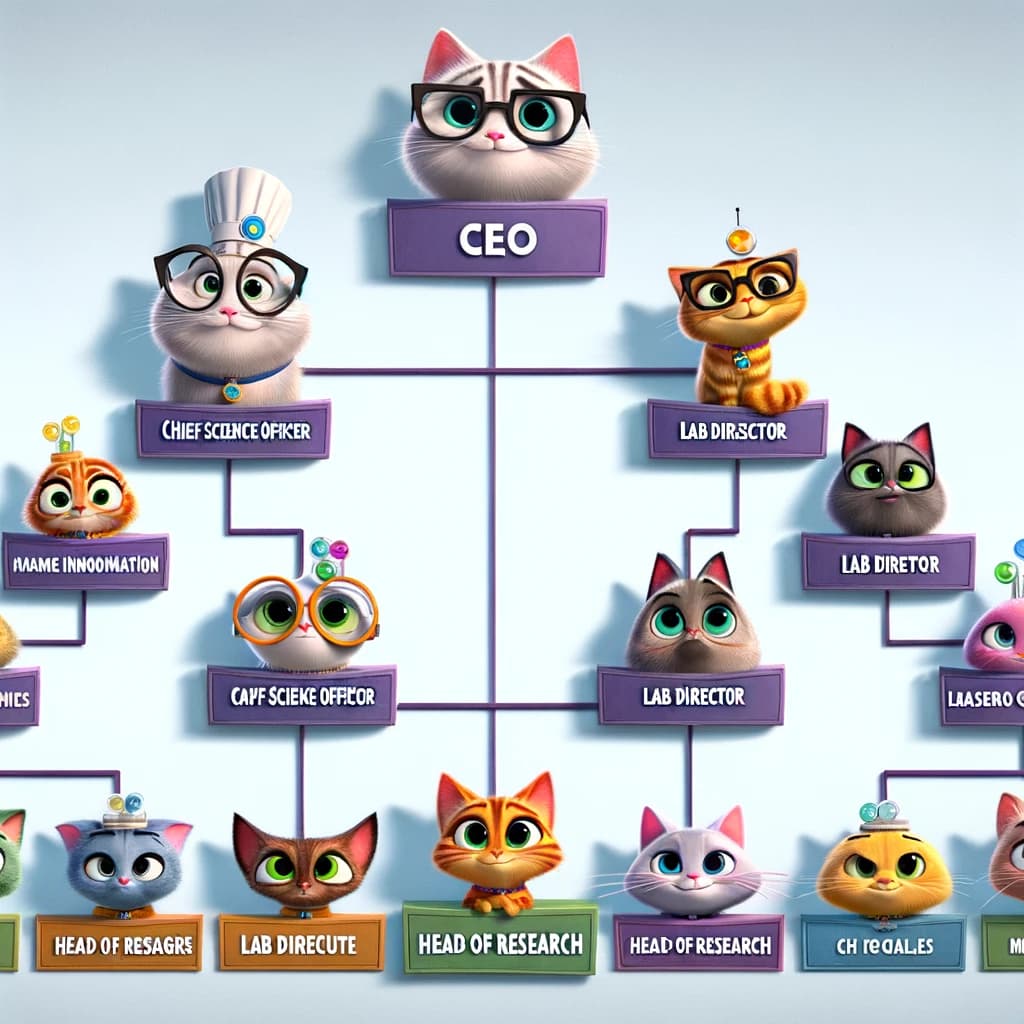
Organization and Structure:
Defines how the laboratory should be organized to ensure effective management. This includes having well-defined roles and responsibilities for all personnel, ensuring that each member understands their role within the laboratory and how they contribute to the ultimate goal of producing reliable results.
Among the most relevant tools that you can implement to comply with this requirement are:
- Organizational charts: Used to visualize the laboratory’s organizational structure, showing the hierarchy of roles and responsibilities within the organization.
- Job descriptions: Documents that detail the responsibilities, tasks, and skills required for each position within the laboratory, helping to clarify the roles of each team member.
- Documented procedures: Documents that describe the key processes and procedures within the laboratory, including human resource management, quality management, and facilities management.
Here are some additional tips for ensuring effective organization and structure in a laboratory:
- Ensure that top management is committed to the implementation of the ISO/IEC 17025 standard.
- Appoint a management representative who will be responsible for overseeing the implementation of the standard.
- Provide training to all staff on the requirements of the standard.
- Regularly review the laboratory’s organizational structure and procedures to ensure that they are effective and up-to-date.
Clause 6: Resource Requirements
Personnel
Laboratory personnel play a fundamental role in performing accurate and truthful testing and calibration, as they are the main actors in the novel called “Laboratory Activities”.
In this requirement, you must ensure the competence of the personnel, their professional development, the proper assignment of responsibilities, and maintain a culture of quality.
To achieve this, you can start by implementing some of these approaches:
Competence matrices: These matrices list the skills and competencies required for each position within the laboratory. They allow you to identify gaps in the skills of the personnel and plan the appropriate training to close those gaps.
Training programs: Establish internal training programs that address the professional development needs of the personnel. These programs may include face-to-face courses, on-the-job training, webinars, and online learning activities.
Performance evaluations: Conduct periodic performance evaluations of the personnel to identify strengths and areas for improvement. These evaluations provide valuable feedback that can be used to guide training and staff development.
Here are some additional tips for ensuring the competence of laboratory personnel:
- Recruit and hire qualified personnel with the appropriate education, training, and experience.
- Provide regular training and refresher courses to keep personnel up-to-date on the latest techniques and procedures.
- Encourage personnel to participate in professional development activities, such as conferences and workshops.
- Provide opportunities for personnel to advance their careers within the laboratory.
Facilities and Environmental Conditions
The laboratory’s facilities and environmental conditions are crucial to ensure the quality and reliability of the tests and calibrations performed.
Regarding this requirement, you must take into account:
Adequate infrastructure: Ensure that the laboratory facilities are suitable to carry out testing and calibration activities safely and efficiently.
Control of environmental conditions: Maintain strict control over environmental factors such as temperature, humidity, and lighting to minimize any impact on the quality and accuracy of the results.
Maintenance and cleaning: Perform regular maintenance and keep the facilities clean to ensure a safe and contamination-free work environment.
Security: Implement appropriate security measures, such as fire extinguishing systems and access control, to protect personnel and samples from any potential hazards.
Here are some additional tips for ensuring adequate facilities and environmental conditions in a laboratory:
- Design the laboratory layout in a way that minimizes the risk of contamination and cross-contamination.
- Use appropriate equipment and materials that are compatible with the tests and calibrations being performed.
- Calibrate and maintain equipment regularly to ensure its accuracy and reliability.
- Monitor environmental conditions and take corrective action when necessary.
- Establish and maintain a pest control program.
- Implement a waste management program to ensure the safe disposal of hazardous materials.
Equipment
The equipment in a laboratory is essential for performing tests and calibrations with accuracy. It is like having the right kitchen utensils to prepare your favorite dish.
The laboratory can ensure that its equipment is properly calibrated, maintained, and available to carry out its testing and calibration activities effectively and reliably.
Some of the activities or tools that you can use to comply with this requirement are:
- Have an inventory of equipment and manage it properly.
- Create a procedure that describes the proper use of the equipment. Technical data sheets or user manuals are perfect templates for creating these procedures.
- Create a program for the calibration of the equipment.
- Conduct internal audits.
- Keep calibration and verification records.
Here are some additional tips for ensuring that laboratory equipment is properly managed and maintained:
- Purchase equipment from reputable suppliers.
- Follow the manufacturer’s instructions for installation, operation, and maintenance.
- Keep equipment clean and free of contamination.
- Store equipment in a safe and secure location.
- Train staff on the proper use of equipment.
- Regularly inspect and test equipment to ensure that it is functioning properly.
- Calibrate equipment at regular intervals.
- Dispose of equipment in a safe and environmentally friendly manner.
Metrological Traceability
Metrological traceability in a laboratory is essential to ensure the reliability of test and calibration results. This involves ensuring that the measurements made are traceable to nationally or internationally recognized measurement standards.
To comply with this requirement, consider the following:
Regular Calibration: Establish a regular calibration program for all measuring equipment used in the laboratory. This ensures that the equipment is properly calibrated and that the measurements are accurate and reliable.
Calibration Certificates: Keep up-to-date records of calibration certificates issued by accredited calibration laboratories. These certificates provide evidence of the traceability of measurements made with calibrated equipment.
Standard Measurement Procedures: Develop detailed standard measurement procedures that describe the method used to perform specific measurements, including references to internationally recognized measurement standards.
Here are some additional tips for ensuring metrological traceability in a laboratory:
- Use reference materials that are traceable to national or international standards.
- Participate in proficiency testing programs to assess the accuracy of the laboratory’s measurements.
- Implement a quality management system that includes procedures for ensuring the traceability of measurements.
Externally Provided Products and Services
This requirement is like trusting a “waterproof” umbrella that turns out to have holes. The laboratory must carefully select suppliers, evaluate their performance, and establish adequate controls for their use.
If you don’t want to buy an umbrella with holes and end up soaked in the rain, do the following before purchasing services externally:
Select reliable and qualified suppliers that provide products and services that meet the laboratory’s requirements.
Regularly evaluate the performance of suppliers to ensure their continued suitability and the quality of the products and services provided.
Maintain records documenting the use of external products and services, including the identification of the supplier, the date of receipt, and any action taken to ensure their conformity.
Here are some additional tips for ensuring the quality of externally provided products and services:
- Visit the supplier’s facilities to assess their quality control procedures.
- Request samples of the products or services before making a purchase.
- Negotiate contracts that clearly specify the requirements for the products or services.
- Inspect the products or services upon receipt to ensure that they meet the requirements.
- Monitor the performance of the products or services in use.
- Take corrective action if the products or services do not meet the requirements.
Clause 7: Process Requirements
Review of Requests, Tenders and Contracts
It is always important to read the fine print in a contract before signing it. This is essential to avoid misunderstandings and ensure that all agreed-upon conditions are met.
To comply with this requirement, make sure to:
- Thoroughly examine each request received to fully understand the client’s requirements and determine if the laboratory has the necessary capacity and resources to meet those requirements.
- Develop bids that accurately and completely reflect the services that the laboratory will provide, including any specific conditions agreed upon with the client.
- Carefully analyze the terms and conditions of any proposed contract before accepting it, ensuring that they are in line with the laboratory’s policies and procedures and that there is no conflict of interest.
- Maintain clear and open communication with the client throughout the review process to ensure that all expectations are understood and mutually agreed upon.
Here are some additional tips for ensuring the effective review of requests, tenders, and contracts:
- Establish a documented procedure for reviewing requests, tenders, and contracts.
- Involve relevant personnel in the review process, such as technical experts, quality assurance personnel, and legal counsel.
- Keep records of all reviews and decisions made.
- Communicate the results of the review to the client in a timely manner.
Selection, Verification, and Validation of Methods
Laboratories must use appropriate and validated methods for all tests and calibrations, including procedures for the selection, validation, and use of these methods.
Whenever possible, you should select standardized methods that meet your requirements and needs. Once you have done so, the best tool you can create is a method validation or verification plan.
During the execution of this plan, you will obtain the necessary results to ensure that your method is suitable for its intended use.
Here are some additional tips for ensuring the selection, verification, and validation of methods:
- Establish a documented procedure for the selection, verification, and validation of methods.
- Involve relevant personnel in the selection, verification, and validation process, such as technical experts, quality assurance personnel, and laboratory management.
- Keep records of all selections, verifications, and validations performed.
- Review the methods used on a regular basis to ensure that they are still appropriate and up-to-date.
Sampling
The sampling process must be such as to ensure the representativeness of the samples, including planning the sampling and procedures to avoid their contamination or degradation.
To adhere to the sampling requirements of the ISO/IEC 17025 standard, laboratories must focus on three key tools:
- Laboratory Information Management System (LIMS) to automate, document, and ensure the traceability of sampling processes.
- Specific Sampling Equipment to improve accuracy and prevent contamination of samples.
- Quality Tools for Sampling, using statistical and quality tools for the design and evaluation of sampling plans.
Here are some additional tips for ensuring the representativeness and integrity of samples:
- Develop a documented sampling plan that specifies the sampling method, the number of samples to be taken, and the location of the samples to be taken.
- Use appropriate sampling equipment that is clean and free of contamination.
- Follow proper sampling procedures to avoid contamination or degradation of the samples.
- Label and store samples properly to ensure their traceability.
- Transport samples in a safe and secure manner.
- Analyze samples promptly to avoid deterioration.
Handling of Test or Calibration Items
From receipt to disposal, samples must be handled in a way that preserves their integrity, including their identification, storage, protection, and disposal.
Samples are as fragile as rose petals. Yes, it may sound a bit sentimental, but it is crucial to handle them with the utmost care possible. If you want to maintain their integrity, keep in mind:
- Develop and follow Standard Operating Procedures (SOPs) to ensure consistent and safe practices in handling items.
- Continuously train personnel in proper handling techniques, correct use of equipment, and established procedures to maintain the integrity of the items.
- Implement quality controls and conduct internal audits to monitor compliance with SOPs and ISO/IEC 17025 standards, allowing for continuous improvement.
Here are some additional tips for ensuring the integrity of test or calibration items:
- Use appropriate containers and packaging to protect the items from damage or contamination.
- Store the items in a secure location with controlled temperature and humidity.
- Label the items clearly with all relevant information, such as identification number, date of receipt, and storage conditions.
- Handle the items with care to avoid damage or contamination.
- Dispose of the items properly in accordance with applicable regulations.
Technical Records
Technical records in a laboratory are like a mountaineer’s journal: essential for documenting each step of the process and ensuring the traceability and integrity of the results.
The best tool you have to comply with this requirement is LIMS.
Laboratory Information Management Systems (LIMS): These systems are essential for laboratory data management, providing a centralized platform within which technical records can be generated and stored.
However, if you do not have the possibility of accessing this system, you can implement the following:
- Physical Logbooks and Standardized Templates
- Organized Physical Filing Systems
- Records Management Training
- Internal Records Audits
- Change Control Procedures
Here are some additional tips for ensuring the quality of technical records:
- Make sure that all records are accurate, complete, and legible.
- Protect records from damage, loss, or unauthorized access.
- Retain records for the required period of time.
- Make records available to authorized personnel.
Measurement Uncertainty
The ISO/IEC 17025 standard requires laboratories to evaluate measurement uncertainty to ensure reliable and traceable results. This involves identifying sources of uncertainty, estimating their magnitude, and clearly expressing them in reports.
This is perhaps the most technically mathematical aspect required by the standard. It can be challenging, I know, it gave me trouble too. However, I managed to take it by the horns. Learn how to do it with these steps:
- Choose a suitable uncertainty estimation method and document it in your management system. The internationally recognized estimation method is the GUM method.
- Implementing the estimation method will allow you to know the standard and expanded uncertainty. From these magnitudes you will be able to express the uncertainty of the measurement.
- Finally, you need to evaluate the uncertainty. There are several methods for doing this. One of the most effective is to compare your estimated value with international standard references.
Here are some additional tips for ensuring the quality of measurement uncertainty:
- Use a validated method for estimating uncertainty.
- Identify all sources of uncertainty.
- Estimate the magnitude of each source of uncertainty.
- Combine the individual uncertainties to obtain the overall uncertainty.
- Express the uncertainty in a clear and concise manner.
Ensuring the Validity of Results
To comply with this requirement, testing and calibration laboratories must implement a series of practices and tools focused on ensuring the accuracy, reliability, and reproducibility of results. Observe these key strategies:
- Participation in Interlaboratory Comparison Programs: Also known as proficiency testing, these are useful tools for evaluating laboratory performance compared to others, identifying and correcting deviations.
- Implementation of Internal Quality Controls: Use certified reference materials, internal controls, and duplicate samples in analysis routines to continuously monitor the quality of results.
- Validation of Test and Calibration Methods: Validate new or modified methods before implementation to ensure they are fit for purpose, including evaluating accuracy, specificity, detection limits, and other critical parameters.
Here are some additional tips for ensuring the validity of results:
- Use appropriate and validated methods.
- Use calibrated equipment and traceable standards.
- Follow documented procedures.
- Train personnel in proper techniques.
- Maintain records of all activities.
- Monitor and review performance regularly.
Reporting of Results
Meeting this requirement ensures that the laboratory provides its clients with clear and accurate reports that allow them to make informed decisions based on the results obtained.
To meet this requirement, the laboratory must present the results in a comprehensible way, include all relevant information, identify limitations or uncertainties, and provide proper identification of the laboratory.
This ensures that reports are accurate and useful for clients’ decision-making.
Here are some key elements of a well-written laboratory report:
- Title: The title should clearly and concisely state the subject of the report.
- Introduction: The introduction should provide background information on the sample, the test or calibration performed, and the purpose of the report.
- Results: The results section should present the data in a clear and concise manner. Tables, graphs, and charts can be helpful in presenting data.
- Discussion: The discussion section should interpret the results and explain their significance.
- Conclusion: The conclusion should summarize the findings of the report and draw any necessary conclusions.
- Uncertainty of measurement: The uncertainty of measurement should be reported in accordance with ISO/IEC 17025:2017.
- Signatures: The report should be signed by the person(s) responsible for its content.
Here are some additional tips for ensuring the quality of laboratory reports:
- Use clear and concise language.
- Avoid jargon and technical terms.
- Use a consistent format.
- Proofread the report carefully before issuing it.
Complaint Management
Testing and calibration laboratories must establish a formal and effective process that allows them to receive, record, and resolve customer complaints in a fair, transparent, and timely manner.
This process is crucial for maintaining customer confidence and continuously improving the quality of service. The following are the essential practices for complaint management:
- Establish a clear and accessible Complaints Policy.
- Record all complaints received in detail.
- Analyze and evaluate the validity and priority of each complaint.
- Develop and implement actions to resolve the complaints satisfactorily.
- Maintain continuous communication with the customer about the progress and resolution.
- Regularly review complaints to drive continuous improvement.
Here are some additional tips for managing complaints:
- Be responsive to customer complaints.
- Investigate complaints thoroughly.
- Take corrective action to resolve complaints.
- Communicate effectively with customers about complaints.
- Maintain records of complaints.
Nonconforming Work Management
Nonconforming work refers to errors that may occur in the laboratory. The ISO/IEC 17025 standard requires a system to detect and manage it. This system should identify, investigate, correct, and record nonconforming work.
Here are the key practices for nonconforming work management:
- Identify and Document all nonconforming work clearly through a procedure.
- Evaluate the Severity and Impact of each nonconforming work and determine the need for immediate actions to prevent its recurrence.
- Investigate the Root Cause using appropriate methods such as the Ishikawa diagram, fishbone diagram, or root cause analysis.
- Implement Corrective and Preventive Actions to address and prevent the recurrence of nonconforming work.
- Monitor and Review the effectiveness of the actions taken.
- Communicate with Stakeholders about the nonconforming work and actions taken.
- Record in Detail the nonconforming work, actions, and follow-up results for continuous improvement and audits.
Here are some additional tips for managing nonconforming work:
- Be proactive in identifying and preventing nonconforming work.
- Use a systematic approach to investigate and correct nonconforming work.
- Take corrective action to prevent the recurrence of nonconforming work.
- Communicate effectively with stakeholders about nonconforming work.
- Maintain records of nonconforming work.
Control of Data and Information Management
The laboratory shall have a system for the control of data and information management to ensure the integrity, confidentiality and availability of data and information.
Documentation
The laboratory shall have documented procedures for:
- Control of data and information management.
- Document control.
- Records management.
- Control of nonconforming work.
- Corrective action and preventive action.
- Internal audits.
- Management reviews.
Data and information management
The laboratory shall have procedures for:
- Identifying, collecting, recording, storing and transmitting data and information.
- Protecting the confidentiality of data and information.
- Preventing unauthorized access, alteration or loss of data and information.
- Ensuring the accuracy, completeness and reliability of data and information.
- Making data and information available to authorized personnel.
- Retaining data and information for the required period of time.
- Disposing of data and information in a secure manner.
Computer systems
The laboratory shall have procedures for:
- Validating computer systems.
- Ensuring the security of computer systems.
- Backing up data and information.
- Recovering data and information in the event of a disaster.
Records
The laboratory shall maintain records of:
- All data and information generated by the laboratory.
- All actions taken by the laboratory.
- All decisions made by the laboratory.
Reviews
The laboratory shall regularly review its data and information management system to ensure that it is effective and meets the requirements of this International Standard.
Management System Requirements
Management System Documentation
Quality Manual: This document is the bible of the management system. Develop and maintain a quality manual that describes the laboratory’s management system, including policies, quality objectives, and organizational structure. This document is optional in the 2027 version of ISO/IEC 17025.
Document Control: Implement procedures for controlling all documents that form part of the management system, ensuring their proper review, approval, updating, and disposal. This will allow your laboratory to keep its papers in order.
Here are some additional tips for managing documents:
- Use a document control system to track the status of documents.
- Ensure that documents are accessible to authorized personnel.
- Review documents regularly to ensure that they are up-to-date and accurate.
- Dispose of documents securely when they are no longer needed.
Control of Records
Establish procedures for the identification, storage, protection, retrieval, retention, and disposal of records. Records must be legible, easily retrievable, and protected against damage, deterioration, or loss.
Here are some additional tips for managing records:
- Use a record control system to track the status of records.
- Ensure that records are accessible to authorized personnel.
- Store records in a secure location.
- Back up records regularly.
- Retain records for the required period of time.
- Dispose of records securely when they are no longer needed.
Risk and Opportunity Management
Incorporate risk and opportunity management into the laboratory’s management system by identifying, evaluating, and managing risks and opportunities related to laboratory activities to minimize their negative impacts and take advantage of opportunities.
Meeting these management system requirements not only helps laboratories comply with international standards but also improves operational efficiency, customer satisfaction, and confidence in laboratory results.
Here are some additional tips for managing risks and opportunities:
- Use a risk management tool to identify and assess risks.
- Develop and implement risk mitigation plans.
- Monitor and review risks regularly.
- Identify and seize opportunities for improvement.
Continual Improvement
Never stagnate. Always look for ways to do things a little bit better, like when you update your smartphone to make it run faster and have the latest features.
Implement a process for the continual improvement of the laboratory’s management system and processes, using tools such as data analysis, corrective and preventive actions, and internal audits.
Here are some additional tips for continual improvement:
- Set clear objectives for improvement.
- Identify and prioritize areas for improvement.
- Implement improvement plans.
- Monitor and evaluate the effectiveness of improvement efforts.
- Make changes as needed.
Corrective and Preventive Actions
When something goes wrong, it’s not enough to say “I’m sorry, it was my mistake.” You have to fix it and make sure it doesn’t happen again. It’s like learning from a mistake so you don’t make it twice.
Create procedures for identifying nonconformities, determining their causes, implementing appropriate corrective and preventive actions, and monitoring the effectiveness of these actions.
Here are some additional tips for corrective and preventive actions:
- Use a root cause analysis tool to identify the root causes of nonconformities.
- Implement corrective actions to address the root causes of nonconformities.
- Implement preventive actions to prevent the recurrence of nonconformities.
- Monitor and evaluate the effectiveness of corrective and preventive actions.
Internal Audits
This is basically giving yourself a check-up every once in a while, to see if you are really living up to what you promise. A little self-reflection never hurts.
Plan and conduct regular internal audits to determine if the management system is effectively implemented and maintained, identifying opportunities for improvement.
Here are some additional tips for internal audits:
- Use an audit checklist to ensure that all aspects of the management system are covered.
- Select qualified auditors who are independent of the areas being audited.
- Follow up on audit findings and implement corrective actions.
Management Review
Imagine it’s like taking your car to the mechanic once a year to make sure everything is running smoothly. It’s the same thing here.
Conduct periodic management reviews to ensure the suitability, adequacy, and effectiveness of the management system, including the quality policy and objectives.
Here are some additional tips for management reviews:
- Involve top management in the review process.
- Review the performance of the management system against the organization’s objectives.
- Identify opportunities for improvement.
- Make changes to the management system as needed.
In conclusion:
I’m sure that by now the ISO/IEC 17025 standard and its requirements are no longer a terrifying monster, but a cute kitten. This is thanks to the fact that we have broken down everything you need to know to comply with this standard without going crazy.
From the scope to the management and technical requirements, we have covered every aspect of this standard. The best part? We have given you practical advice and clear guidelines to ensure that you are on track to comply with the standard.
By following our recommendations, you can improve the quality and confidence in your test and calibration results. So, let’s get to work! At the end of the day, complying with ISO/IEC 17025 is not only an obligation, but an opportunity to improve your laboratory game!