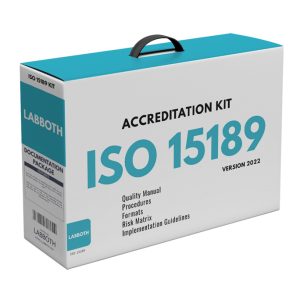

When it comes to running a clinical laboratory, staying aligned with international standards like ISO 15189:2022 can sometimes feel overwhelming. But don’t worry! In this article, we’re breaking down all the mandatory procedures you need to implement clearly and simply, helping you make sure your lab stays compliant without any headaches.
We’ll guide you step-by-step through the key procedures outlined in ISO 15189:2022, including essential practices for managing personnel, calibrating equipment, securing patient samples, and ensuring the validity of your results. By the end of this guide, you’ll have a clear roadmap to confidently manage your lab’s operations and quality standards.
Procedure for Personnel: Clause 6.2.5 of ISO 15189:2022

The procedure needs to have the following aspects:
- Identify the main competency and qualification personnel requirements in order to implement specific tests and analyses proposed by the laboratory.
- Determine the personnel roles and responsibilities like education, training experience and skills required to carry out the tests and analyses.
- Establish what the necessary controls are to guarantee the personnel integrity and safety, like specifying those who are responsible for personnel health and safety, and executing safety measures to prevent any accidents.
- Define what the necessary controls are to make sure that the integrity and security of data are well kept. Try to identify those responsible for data security and implementing measures to prevent unauthorized access.
- Have the necessary controls ready to secure the confidentiality of the patient´s information, taking into account those responsible for keeping the confidentiality to protect the patient´s privacy.
It is necessary to keep records of the selection, hiring, training, supervision and evaluation of all members in the value chain of the tests.
Procedure to calibrate the equipment: Clause 6.5.2 of ISO 15189:2022

This procedure needs to have the following aspects:
- Determine the equipment that require calibration, taking into account the criteria to see when the calibration process should be done.
- Determine the calibration standard needed for each equipment, including the traceability to national and international standards.
- Establish the roles and responsibilities of the different laboratory team members for the calibration process, having in mind who should do the calibration, who should analyze the results and who should make the corrective actions needed.
- Define the methods and the calibration frequency of the equipment, and try to include the calibration procedures, the acceptation criteria and the preventive measurements to minimize the errors.
- Determine the necessary controls to assure equipment integrity and security, and identify the ones that are responsible for the equipment safety and the measurement implementation to damage prevention.
- Design a documentation system to record all calibration details, incorporating information related to the date, calibration results, the standards used, procedures and the ones responsible for the calibration process.
- Establish the process to review and analyze the calibration results, and use a procedure for documenting those results and any kind of corrective action taken.
In any event, when equipment is calibrated by an external provider, it is essential to verify that the provider is accredited to ISO/IEC 17025.
All calibration records—including calibration certificates, dates, details of responsible personnel, certificates for standards or certified reference materials, and any other pertinent information—must be preserved.
Service Agreement Procedure – Section 6.7.1 of ISO 15189:2022

This procedure helps both the lab and the client to be on the same page about the services given, assuring that the lab meets the client requirements to cut down misunderstandings.
You should keep records of the agreement service, having the client´s request, the service agreement itself, and any other related communication.
External Products and Services Procedure – Section 6.8.3 of ISO 15189:2022

You need to take into account that this procedure should cover:
- Determine the external products and services required for the lab to run smoothly, including the requirements and criteria for having the right suppliers.
- Deliver the roles and responsibilities of different lab team members in the selection, evaluation and control of external products and services. This means that you need to include who´s in charge of the evaluating suppliers process and who´s in charge of making the final calls on the selection and evaluation.
- Define criteria to assess external suppliers, having in mind their ability to meet the lab´s specific requirements.
- Establish the criteria for selecting suppliers, taking into account the quality of products evaluation and service, the supplier´s ability to meet lab requirements, their performance and past experience.
- Have the necessary controls to assure the integrity and security of external products and services like determining who´s responsible for product and service security and putting in place the measurement required to prevent unauthorized access.
- Create a documentation system to keep all details of the supplier evaluation and selection process, such as the date, evaluation results, selection criteria, and who was responsible.
Also, you should maintain purchase records that include details about the need for the purchase, the supplier request, contract details, receipt, inventory updates, and the supplier evaluation.
Patient Sample Security Procedure – Section 7.2.7.1 of ISO 15189:2022

This procedure is in charge of making sure that the patient´s samples are collected and processed in a safe and proper way in order to reduce the risk of mistakes and contamination. This also helps the identification of samples to be correctly handled, keeping the test results accurate and costumers happy.
The priority for clinical labs should be keeping the samples in top shape. It´s important to manage these samples with the most appropriate care and precision so that you can receive reliable results
The procedure points out the importance of collecting samples correctly. It also gives the steps for storing and labeling them properly.
Additionally, it provides safely transporting specimens to keep the chain of custody, together with detailed records of all specimen-related information to secure the samples´ integrity.
Validation method and Verification Procedure- Section 7.3.2 of ISO 15189:2022

This procedure needs to have the following aspects:
- Selection method: First, you need to choose the method you are going to try to validate or verify, taking into account your lab´s necessities and the clinical and epidemiological requirements.
- Establish Validation and Verification Criteria: Outline the criteria for validation and verification like precision, accuracy, linearity, detection limit, specificity and sensitivity.
- Have the Validation and Verification Procedure ready: Design a detailed step-by-step process to validate and verify the method in order to make sure it´s suitable for clinical lab use. So, this should take into account the following aspects:
- Review the method´s documentation, incorporating manuals, instructions, and protocols.
- xamine if the method meets the lab´s needs
- valuate its precision, accuracy, linearity, detection limit, specificity, sensitivity, and other key parameters.
- stablish the operating conditions for the method like calibration, quality control, maintenance and ongoing verification.
- eep a detailed record of every action taken.
Remember that you should maintain records of the method validation and verification process, including any corrective actions taken. The documentation must include the validation protocol, performance evaluation results, and any actions taken based on those results.
Procedure to Ensure the Validity of Results – Section 7.3.7.1 of ISO 15189:2022

This is a procedure that you could use to integrate into a single quality control process or to treat as the overarching approach to ensuring result validity. Also, the standard proposes two additional procedures: internal quality control and external quality control. Based on it, the procedure needs to cover the following aspects if you decide to develop it in a separate way:
- It should have everything related to verifying accuracy and precision—things like checking calibration curves, running blanks, duplicates, fortified samples, etc.
- It also needs to have a solid understanding of your testing methos because the manufactures of your equipment, reagents, or method developers have their own quality control procedure.
- It should also have a description about how control chats are created and monitored for the tests if necessary.
Internal Quality Control Procedure- Section 7.3.7.2 of ISO 15189:2022

This procedure needs to have at least the following aspects:
- It needs to identify methods and processes in order to figure out what methods and processes are important for getting quality results related to think sampling, sample prep, running tests and interpreting the data.
- It should define the right quality controls for those critical methods, having in mind factors like stability and reproducibility.
- It should set acceptance criteria to establish what ´´Good´´ looks like for the quality controls. Also, base these criteria on the precision and accuracy of the results and the specs from the quality control manufacturer.
- You need to have control frequency in order to determine how often you will run these quality controls. This is based on how variable your critical methods are and how complex your tests are.
- It is important to design a step-by-step process for logging and analyzing your quality control results. Also, you need to have a plan to spot any deviations and take corrective actions when needed.
- Reviewing the Internal quality control performances to evaluate if your quality control system is working well, that way you can tweak and improve it over time.
You should train your team to assure that everyone in the lab knows how to use and interpret the quality controls and understands the procedures for handling deviations and taking corrective actions.
This method keeps everything simple and effective, making sure your lab’s quality remains top-notch while the process stays easy for everyone.
Procedure to Participate in an External Quality Program – Section 7.3.7.3b of ISO 15189:2022

This procedure should have at least the following aspects:
- You need to Find the Right Quality Programs to spotting the external quality programs that match the scope and type of tests your lab does. Set clear criteria to pick the best fit.
- Defining Team Roles to Lay out who’s responsible for what during the program participation is important. That means figuring out who signs up, who runs the tests, and who analyzes the results.
- Set Up Sample and Result Submission to determine what the best methods are to send out your samples and receive the results, and set specific deadlines for both.
- Create guidelines for understanding the external quality program results. This should include using the program’s acceptance limits and comparing them with your previous results.
- Figure out the controls needed to keep your samples and results safe. For example, designate who receives each sample and make sure every step in the process is well-documented.
- Set criteria for what to do if the results fall outside the accepted limits. This should include identifying the root cause and taking steps to prevent future issues.
- Develop a clear process for reviewing and analyzing the external quality program results, and document both the outcomes and any corrective actions you take.
Also, be sure to keep detailed records of your lab’s participation in these external quality programs—this includes registration info, test results, and any corrective measures that were implemented.
Procedure for Comparing Analysis Results – Section 7.3.7.4 of ISO 15189:2022

This procedure should have at least the following aspects:
- Choose the appropriate techniques to compare test results, whether between different labs or over time within your own lab.
- Set clear standards for what makes results comparable. This should include manufacturer specifications for your equipment and reagents, as well as any legal, regulatory, clinical, and epidemiological requirements.
- Develop a detailed, step-by-step plan for comparing results. This should include what steps to follow if there are any deviations from your comparability standards. Your process should cover:
- Selecting samples for the comparison.
2. Preparing these samples using the chosen comparison method.
3. Running the analyses in both your lab and the comparison lab.
4. Evaluating and comparing the results.
5. Pinpointing any discrepancies and determining corrective actions.
6. Keeping a detailed record of all actions taken.
Be sure to maintain records of the comparability tests and outcomes, along with any corrective measures you implement. The documentation should include the comparability protocol, the results, and any follow-up actions.
Hope you find this article useful. See you soon!