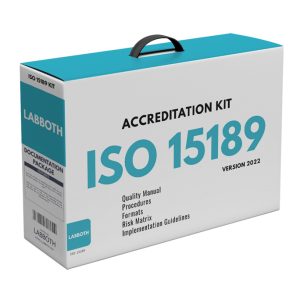

Is your laboratory ready for the future? Discover the requirements of the ISO 15189:2022 standard and ensure the quality of your results.
The ISO 15189:2022 standard is key for quality management in medical laboratories. Today, we will guide you through its requirements and provide you with resources for its implementation.
Keep reading and take your laboratory to the next level!
What is the ISO 15189 standard?
The standard defines the requirements that medical laboratories must meet to demonstrate their technical competence and their ability to produce reliable laboratory results.
Its main objective is to ensure the quality and reliability of laboratory test results, which in turn has a direct impact on the health and safety of patients.
In other words, this standard is like a divine law governing the universe of clinical laboratories. Its principles, engraved in stone, guide towards quality and reliability.
By following its commandments, laboratories achieve excellence, offer pure results, and become guardians of health.
Main changes between the 2012 and 2022 versions of the ISO 15189 standard:

This standard was first published in 1994 and has been revised several times, with the latest version being published in 2022.
Compared to its previous version from 2012, the updated version introduced the following modifications:
Risk management-based approach: The updated version places greater emphasis on the identification and control of risks to ensure the quality of the results.
Requirements for personnel competence: New requirements are established for the training and experience of laboratory personnel.
Process-based approach: A process approach to laboratory management is adopted, facilitating integration with other management systems.
Simplification of the structure: The structure of the standard is simplified, making it easier to understand and implement.
Why is the ISO 15189 standard important?

Establishing the importance of the ISO 15189 standard is crucial in situations such as convincing senior management to invest in its implementation, or for example, when you want to train your staff.
If you want to understand the main advantages of implementing the standard, consider the following benefits:
Benefits for the laboratory:
- Improves the quality and reliability of results, directly impacting the health and safety of patients.
- Increases the efficiency and productivity of the laboratory, optimizing processes and resources.
- Strengthens the laboratory’s image and reputation, generating trust in clients and stakeholders.
- Opens new business opportunities by accessing more demanding markets.
Benefits for the staff:
- Promotes a culture of quality and teamwork.
- Encourages the professional development of staff through training and education.
- Improves job satisfaction by providing a safer and more efficient work environment.
Benefits for the organization:
- Reduces legal and financial risks associated with errors in results.
- Demonstrates commitment to quality and continuous improvement.
- Facilitates integration with other management systems like ISO 9001.
Now that you know what the standard is and the benefits obtained from implementing it, we will explain in detail what the ISO 15189 standard requirements are and how to meet them in your laboratory.
Requirements of the ISO 15189:2022 standard
To facilitate the understanding of the requirements and provide tools for their compliance, we will group the requirements considering their classification in the standard, as follows:
Clause 4: General requirements.
Clause 5: Requirements for structure and governance.
Clause 6: Resource requirements.
Clause 7: Process requirements.
Clause 8: Management system requirements.
Clause 4: General requirements.
From today, you will enter and archive in your mental computer three key concepts regarding management system requirements: impartiality, confidentiality, and patient-related requirements.
First, we will describe in simple terms the requirements of this section, and then we will briefly indicate the tools used to comply with them.
General requirements: Impartiality.
You can think of impartiality as the ability of your laboratory to be and remain unaltered by external influences.
In other words, impartiality is like a bulletproof vest that protects you from external influences that could harm the quality of your results.
General requirements: Confidentiality.
In the requirement for impartiality, you must protect yourself. In the requirement for confidentiality, on the other hand, it seeks to protect your users and patients.
Confidentiality demands that laboratory activities must be carried out in such a way that protects your patients’ information.
General requirements: Patient-related requirements.
These requirements refer to the laboratory’s obligation to ensure that patients are informed and have the opportunity to consent to the tests being performed.
Tools to comply with general requirements.
To comply with the requirements related to impartiality, confidentiality, and patient-related issues, you can start applying the following basic tools:
- Define clear policies related to these terms within your quality manual.
- Include in your staff training program the importance of impartiality and confidentiality and how to maintain them in daily work.
- When conducting your internal audits, make sure to cover these aspects. For example, you should review whether policies or procedures regarding confidentiality and impartiality have been complied with.
- Implement an information management system where information is protected against unauthorized access, loss, or alterations.
- Obtain and maintain informed consent from patients before performing tests. Don’t forget to record everything.
Clause 5. Structural and governance requirements.
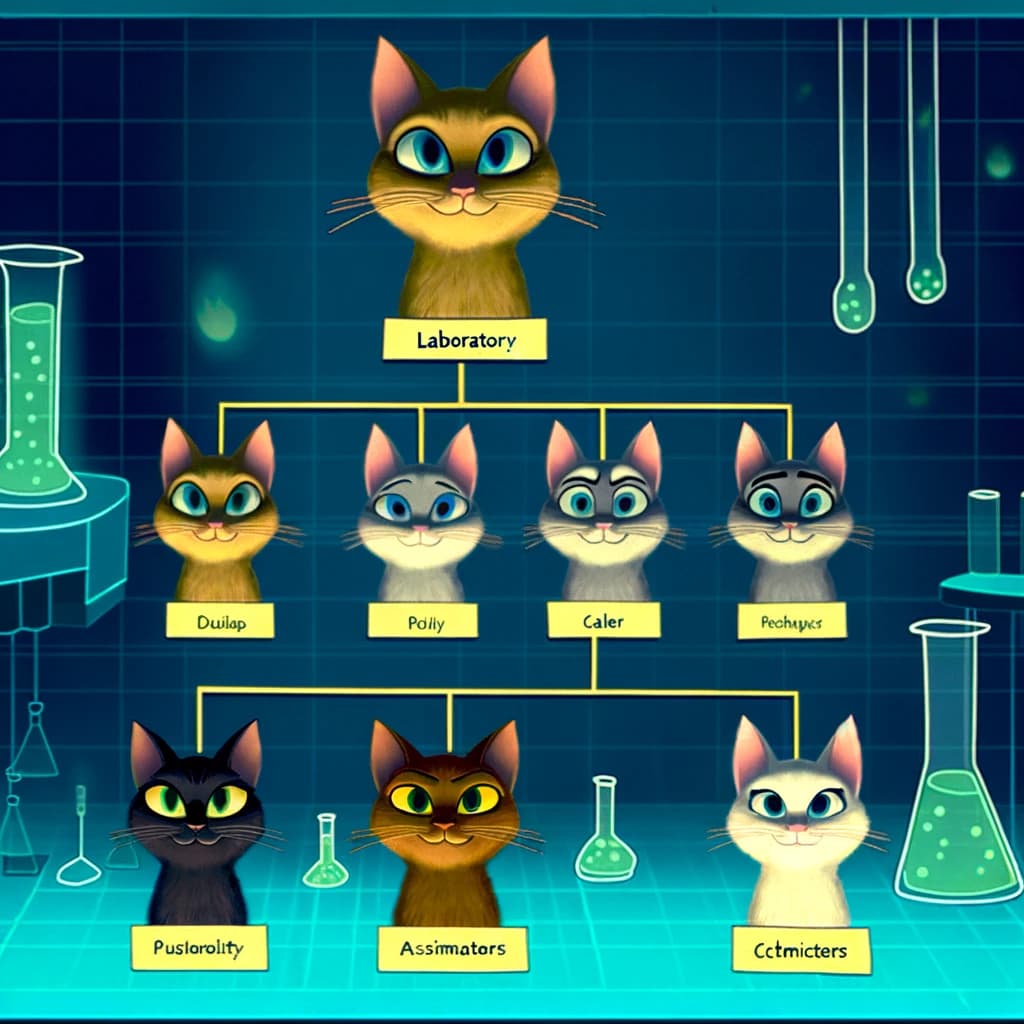
These requirements are fundamental to ensure that the laboratory has an appropriate organizational structure and an effective management system. First, we’ll show you the requirements related to the structure and give you the best tool to meet them.
Then, we’ll address the governance requirements and similarly indicate tools to ensure their compliance.
Structural Requirements: Legal Entity.
The laboratory must have a defined legal structure, such as a company or partnership, and must appoint a legal representative.
Structural Requirements: Laboratory Director.
The laboratory must have a director with the training, experience, and skills necessary to lead the laboratory and ensure the quality of the results.
Structural Requirements: Laboratory Activities.
The laboratory must define the activities it performs, including the tests, analyses, and services it offers, as well as the scope of these activities.
Imagine the scope as a laboratory’s menu: it details what tests are offered. It’s crucial to define it well to ensure they have the staff, equipment, and procedures necessary to perform those tests with quality and confidence.
Structural Requirements: Structure and Authority.
The laboratory must have a defined organizational structure with clear roles and responsibilities, and establish channels of internal and external communication.
Tool to meet structural requirements.
The best tool at your disposal or that you must create now to meet the structural requirements is called a quality manual.
The quality manual is like a compass for the laboratory. It guides the staff in processes and procedures, ensuring quality and consistency in activities.
If you want to have an optimal quality manual that meets the structural requirements of the ISO15189 standard, be sure to include the following:
- Definition of the legal structure of the laboratory and appointing a legal representative with documented responsibilities and authorities.
- Definition of the laboratory director’s profile in the quality manual and documentation of their training, experience, and skills.
- Establishment of the laboratory’s scope, detailing the activities it performs.
- Representation, through a scheme, of the organizational structure, documentation of each person’s roles and responsibilities, and establishment of communication channels.
Governance Requirements: Policies and Objectives.
For your laboratory to be recognized for its commitment to quality, continuous improvement, and customer satisfaction, you must define and document policies and objectives aligned with a quality management system.
These policies, like in the structural requirements, can be included within the quality manual. Doing so appropriately will allow you to demonstrate compliance with this requirement.
The main characteristics of these requirements include:
- Objectives must be measurable.
- Senior management must be committed to ensuring the implementation of a comprehensive management system.
- Additionally, quality indicators that evaluate the laboratory’s processes should be created.
Governance Requirements: Risk Management.
In addition to the requirement to establish policies and objectives, your laboratory must manage risk within it.
Today, risk management is like a boom within quality management systems. Therefore, you must be very aware of this requirement.
To comply, there is no better option than implementing a risk management process that identifies, assesses, and controls risks that may affect patients or laboratory activities.
Some of the tools we have used and consider valuable when creating a process to assess risks are:
- SWOT analysis.
- Ishikawa diagram or fishbone diagram.
- Risk matrix.
- Specific software for risk management.
Clause 6: Resource Requirements.
The ISO 15189 standard sets requirements for resource management in clinical laboratories, aiming to ensure the quality and reliability of test results.
Resource Requirements: Personnel

Within this requirement, the standard establishes three main aspects: first, the laboratory must have enough personnel to carry out its activities.
Second, internal or external personnel must follow impartiality policies, which, as you know, you must define in your quality manual.
And third, you must create a staff induction program. When addressing these requirements, consider the following:
Tools to comply with the personnel requirement.
Create a training program where you initially identify training needs. Implement resources such as workshops, advisories, consultancies, etc. Finally, evaluate this program and make necessary modifications.
Implement a competence evaluation system. You can choose methods such as observation of activities, review of activity records, or even better, participate in inter-laboratory tests.
Clearly define responsibilities and authorities for each team member.
Implement a competence management system with training, evaluation, and records.
Evaluate and supervise external personnel involved in laboratory activities.
Resource Requirements: Facilities and Environmental Conditions

Within these requirements, you must consider two basic aspects: control of facilities and the different types of facilities you must have in your laboratory.
Regarding activities related to the control of your facilities, it is advisable to consider the following:
The facilities must have a design and distribution suitable for the laboratory’s activities, with separate spaces for different types of tests.
Consideration should be given to the circulation of personnel, samples, and materials, prevention of cross-contamination, and the safety of personnel and patients.
Environmental conditions that you must control and record can include: temperature, humidity, vibrations, noise, lighting, ventilation, power supply, water, and gases.
On the other hand, keep in mind that there are three types of facilities within the laboratory. Make sure to comply with the previously given recommendations in each of the following facilities:
- Storage facilities.
- Personnel facilities.
- Sampling facilities.
Resource Requirements: Equipment, Reagents, and Consumable Materials
The ISO 15189 standard sets a series of crucial requirements to ensure the quality and reliability of test results.
Among these fundamental pillars are those related to the selection, acquisition, maintenance, calibration, storage, and quality control of equipment, reagents, and consumable materials.
In the following lists, we indicate how to comply with these requirements in a simple way:
Tools to comply with equipment requirements.
Conduct a needs assessment: Identify the necessary equipment for the tests you perform, considering their performance, precision, and reliability.
Choose reliable suppliers: look for suppliers that guarantee the quality of their equipment and provide good after-sales service.
Implement a preventive maintenance program: Establish regular maintenance and calibration plans to ensure the correct functioning of the equipment.
Keep documentation up to date: Preserve user manuals, maintenance and calibration records, and calibration certificates.
Tools to address requirements related to equipment and consumable materials.
Define selection criteria: Establish quality criteria for the selection of reagents and consumable material, such as purity, stability, and compatibility with equipment.
Select reliable suppliers: Look for suppliers that meet quality standards and provide analysis certificates.
Store properly: Store reagents and consumable material under optimal conditions of temperature, humidity, and light. One of the best options is to implement the principles of the Globally Harmonized System (GHS).
Implement a quality control system: Perform periodic controls to verify the quality of reagents and consumable material before their use.
Ensure traceability: Maintain a system that allows identifying the origin, batch, and expiration date of all materials used.
Resource Requirements: Service Provision Agreements and Externally Supplied Services.

The requirements related to service provision agreements ensure the quality and traceability of subcontracted tests and ensure consistency with laboratory standards.
To comply, you can start by addressing the following key points:
Scope Definition:
- Clearly identify the services that are subcontracted.
- Specify the tests and procedures to be performed.
- Establish the expected quality and performance criteria.
Supplier Selection:
- Evaluate the competence and experience of the provider.
- Verify that the provider meets the requirements of the ISO 15189 standard.
- Conduct periodic audits to ensure continuous compliance.
Documentation and Communication:
- Prepare detailed and transparent service provision agreements.
- Maintain fluid communication with the provider.
- Document and record all interactions and results.
Clause 7: Process Requirements.

From the reception of samples to the delivery of results, every stage of the analytical process must be carefully controlled to ensure quality, reliability, and customer satisfaction.
This section focuses on presenting tools and resources to optimize process management. First, we will address the requirements related to the pre-analytical, analytical, and post-analytical phases within the laboratory.
Then, we will show you the remaining requirements, such as the management of non-conformities, information control, and handling of complaints.
Process Resources: Pre-analytical Phase.
This covers all activities from the request for a test to the reception and preparation of the sample for analysis.
In this section, the standard requires you to define clear procedures for the reception, identification, and storage of samples.
You must implement a risk management system to minimize preanalytical errors. Additionally, train personnel in the correct handling and management of samples.
Tools to use in this phase include:
- Test request forms.
- Sample labeling system.
- Preanalytical procedures manual.
- Sample management software.
- Regular training for personnel.
Process Resources: Analytical Phase.
This encompasses all activities related to carrying out tests, from the selection of the method to the obtaining of results.
Within these requirements, it is necessary to consider the validation of analytical methods, the implementation of an internal and external quality system, and of course, do not overlook the traceability of reagents and consumables.
To ensure these requirements, I recommend the following tools:
- Analytical procedures manual.
- Quality control records.
- Data management software.
- Equipment calibration certificates.
- Reactives traceability system.
Process Resources: Post-analytical Phase.
This phase includes all actions carried out once the test results have been obtained.
To ensure the requirements within this process, do not forget to:
- Ensure the confidentiality of results.
- Create a manual for result interpretation.
- Acquire, if possible, a report management software.
- Perform quality control procedures for reports.
- Include data confidentiality policies.
Process Resources: Non-conforming Work.
It refers to the identification, assessment, and management of deviations or non-conformities at any stage of the analytical process.
There are various tools within the quality management world to find, assess, and manage non-conforming work. Here are some tools or situations where it is possible to identify this aspect:
- Non-conformity forms.
- Root cause identification procedure, or the famous Ishikawa diagram we mentioned in previous sections.
- Plan for preventive and corrective actions.
Process Requirements: Data Control.
It covers all those requirements related to the management of information generated in the laboratory, including its integrity, traceability, and security.
The standard requires you to implement a data management system, ensure its integrity and traceability, and protect it against possible unauthorized access.
There are three main tools to ensure the above: the data management manual, the data handling policy within the quality manual, and the acquisition of a data management software.
Process Requirements: Complaint Management.
A complaint management system is responsible for receiving, analyzing, and resolving dissatisfaction from patients, clients, and laboratory personnel. This is a fundamental requirement in terms of process requirements.
To comply, you can implement a suitable procedure where: you receive complaints through channels such as forms or mailboxes. Record and categorize the complaints with essential information.
In addition to this, the procedure must analyze and investigate the origin of the complaint. Likewise, corrective actions must be implemented and continuous monitoring maintained.
Process Requirements: Continuity Planning and Emergency Preparedness.
The ISO 15189 standard demands that your laboratory be prepared to face emergencies and maintain its operations. Here’s how:
Clear Policy: Define a plan to continue operating in the face of interruptions. Identify potential risks and how to prevent or mitigate them. Have procedures to respond and restore activity.
Action Plan: Detail who does what in an emergency. Define how to communicate alerts, protect personnel, patients, and assets, and recover operations. Ensure you have the necessary resources (equipment, supplies).
Training and Practice: Train your staff in emergency response, use of safety equipment, and risk prevention. Conduct drills to evaluate the plan, identify improvements, and familiarize the team.
Constant Updates: Regularly review and update the policy and plan to adapt to changes or incorporate learnings from past events.
Document Everything: Keep updated records of the policy, plan, trainings, drills, evaluations, and revisions.
Preparation is key! With these steps, your laboratory will be ready for any situation and can continue providing excellent services.
Clause 8: Management System Requirements.

Management system requirements are the fundamental pillars to ensure the proper functioning and effectiveness of a system implemented in an organization.
These requirements establish a reference framework that defines the guidelines to follow to achieve the set objectives and ensure quality, safety, and reliability of processes.
Management System Requirements: Documentation of the Management System.
The laboratory’s management system must be documented in a clear, concise, and understandable manner.
The documentation must include all the necessary elements for the implementation and operation of the system.
The documentation must be available to all relevant interested parties and use a uniform format, style, and language to facilitate its use.
Control of Management System Documents:
A procedure for the control of management system documents must be established.
This procedure must ensure the creation, review, approval, distribution, version control, and disposal of documents.
Documents must be uniquely identified and subjected to regular reviews.
Control of Management System Records:
As in the previous section, a procedure for the control of management system records must be established.
This procedure must ensure the identification, collection, storage, protection, retention, and disposition of records.
Records must be legible, traceable, and available for consultation.
Tools for addressing management system documentation, document management, and record control requirements.
Some of the tools you can implement to address this category of management system requirements include:
Document management software: Allows for efficient creation, storage, organization, and control of documents.
Online collaboration tools: Facilitate the creation, review, and editing of documents in real-time. Examples: Google Docs, Microsoft Office 365, Dropbox Paper.
Document templates: Help create documents quickly and consistently. You can check out this Editable Templates Kit to comply with ISO 15189 quickly and without stress.
Management System Requirements: Risk Assessment and Improvement Opportunities.
In the structural and governance requirements section, we discussed the importance of complying with these requirements. Additionally, we provided basic tools to achieve compliance.
Remember, some of the best options we have at the moment for identifying risks are:
- SWOT analysis.
- Risk matrices.
- Ishikawa diagram.
The use of these tools will allow you, among other things, to identify risks and determine opportunities for improvement at the same time. Additionally, you can assess the risk, carry out its treatment, and monitor it.
Management System Requirements: Non-conformities and Corrective Actions.
A non-conformity refers to a deviation from a legal, contractual, laboratory management system requirement, or any other specified requirement.
On the other hand, a corrective action corresponds to the measure taken to eliminate the cause of a detected non-conformity and prevent its recurrence.
By complying with the requirements related to these two terms, your laboratory instantly meets legal and contractual requirements and satisfies the needs and expectations of customers.
Moreover, it improves the management system, reduces the risk of errors and failures, and prevents the recurrence of problems.
To properly manage non-conformities, you can implement the following steps:
Detection of Non-conformities:
- Internal or external audits are perhaps the activities that most likely allow the detection of non-conformities in your laboratory.
- In addition to this activity, there are also management system reviews, customer complaints, and employee reports.
Assessment of Non-conformities:
In this step, you can determine the severity of the non-conformity, identify the root cause of the problem, and assess the potential impact of the non-conformity.
Implementation of Corrective Actions:
Next, you must define actions to eliminate the root cause of the problem, implement the corrective actions, and subsequently monitor the effectiveness of the corrective actions.
Documentation:
Finally, like any process, there must be an adequate record of the non-conformity. Likewise, you must document the implemented corrective actions and record the follow-up and verification of the effectiveness of the corrective actions.
Management System Requirements: Management Reviews.
As we mentioned earlier, management has to be involved in implementing a management system and maintaining it integrally.
The aspects to consider in these requirements are:
Planning:
- Define the frequency (annually or more if there are significant changes).
- Choose the participants (senior management, key area managers).
- Set the agenda (topics to review, allocated time).
- Collect information (reports, KPIs, complaints, risk analysis).
Execution:
- Gather the management and present the information.
- Evaluate the system’s effectiveness and areas for improvement.
- Verify compliance with requirements and risk management.
- Review the quality policy and objectives (validity and adequacy).
- Evaluate customer satisfaction.
- Make consensus decisions on the actions to implement.
Documentation and monitoring:
- Draft a record with the topics, decisions, actions, responsible parties, and deadlines.
- Implement the corrective or preventive actions.
- Monitor the progress and effectiveness of the actions.
- Verify the effectiveness of the actions in subsequent reviews.
In Conclusion
Finally, you’ve made it. We have finished with the requirements of the ISO 15189 standard. It wasn’t an easy task, but we managed. We met our objective: to explain each requirement of the standard completely and provide some resources or useful tools for its compliance.
The requirements of the standard are very extensive. However, in this guide, we have summarized them in an easy-to-understand manner.
I am sure that after this, you will be able to tackle the challenging, but not impossible, requirements for clinical laboratories.
Now, move forward with firm steps towards the successful implementation of the ISO 15189 standard.
Your content goes here. Edit or remove this text inline or in the module Content settings. You can also style every aspect of this content in the module Design settings and even apply custom CSS to this text in the module Advanced settings.
Your content goes here. Edit or remove this text inline or in the module Content settings. You can also style every aspect of this content in the module Design settings and even apply custom CSS to this text in the module Advanced settings.
Your content goes here. Edit or remove this text inline or in the module Content settings. You can also style every aspect of this content in the module Design settings and even apply custom CSS to this text in the module Advanced settings.
Your content goes here. Edit or remove this text inline or in the module Content settings. You can also style every aspect of this content in the module Design settings and even apply custom CSS to this text in the module Advanced settings.
Your content goes here. Edit or remove this text inline or in the module Content settings. You can also style every aspect of this content in the module Design settings and even apply custom CSS to this text in the module Advanced settings.
Your content goes here. Edit or remove this text inline or in the module Content settings. You can also style every aspect of this content in the module Design settings and even apply custom CSS to this text in the module Advanced settings.
Your content goes here. Edit or remove this text inline or in the module Content settings. You can also style every aspect of this content in the module Design settings and even apply custom CSS to this text in the module Advanced settings.
Your content goes here. Edit or remove this text inline or in the module Content settings. You can also style every aspect of this content in the module Design settings and even apply custom CSS to this text in the module Advanced settings.